
Endoscopic vaginal surgery
When should endoscopic surgery be considered?
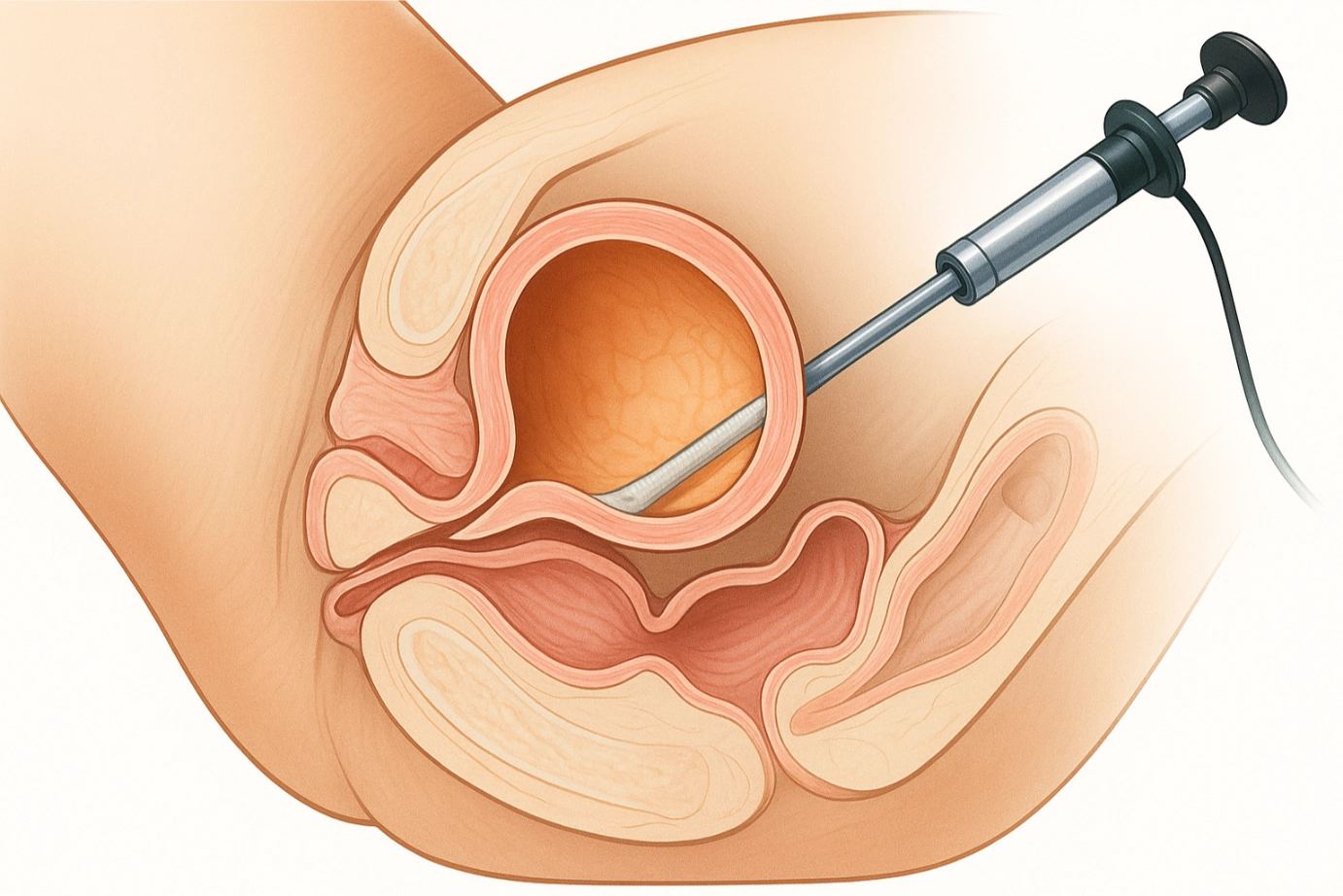
Endoscopic vaginal surgery is a group of procedures performed without skin incision, using an endoscope to pass through the natural tract (urethra, vagina).
This minimally invasive approach can effectively treat a wide range of urological pathologies, often with simpler post-operative procedures and faster recovery.
The endoscopic approach is preferred for treating a number of urinary tract disorders, including :
✔ Urinary lithiasis (bladder or ureter stones),
✔ Bladder tumors (superficial lesions),
✔ Urethral strictures (urethral stenosis),
✔ Hematuria of undetermined origin (exploration),
✔ Painful bladder syndrome (hydro-dystension),
✔ Urinary incontinence (submucosal injection),
✔ Diagnostic bladder or urethral biopsies.
This approach allows complete exploration of the urethra and bladder, and in some cases, immediate intervention.
Diagnostic cystoscopy vs. Other treatments
✔ Diagnostic cystoscopy
🔹 Direct visualization of the urethra and bladder using a rigid or flexible endoscope.
🔹 Performed under local or general anesthesia.
🔹 Used to diagnose tumors, inflammation, anatomical abnormalities or lesions related to a neurological or painful bladder.
✔ Transurethral resection of bladder tumor (TURBT)
🔹Treatment of superficial bladder tumors.
🔹Ablation of the tumor via an electric loop.
🔹Anatomopathological analysis essential to guide subsequent treatment.
✔ Endoscopic stone treatment (lithotripsy)
🔹 Fragmentation and extraction of bladder or ureter stones.
🔹 Use of laser (holmium) or ultrasound.
🔹 Avoids incisions and promotes rapid recovery.
✔ Bladder hydro-dystension
🔹Technique used for certain forms of painful bladder (interstitial cystitis).
🔹Controlled bladder distension under anesthesia.
🔹An analgesic effect and improved urinary comfort in some cases.
✔ Urethral stricture incision
🔹 In cases of urethral stricture, which can lead to micturition disorders.
🔹 Incision under visual control, sometimes with placement of a temporary catheter.
✔ Submucosal injections
🔹Injections of specific substances (hyaluronic acid, botulinum toxin) into the bladder or urethral wall.
🔹 Indicated in cases of urinary incontinence, neurological bladder or resistant overactive bladder.

Procedure
Surgical procedure: modalities Duration : from a few minutes to about an hour Hospitalization : outpatient (same-day discharge) Access route : natural, without external scarring Urinary catheterization : sometimes necessary a few hours after the procedure
Post-operative care • Moderate burning during urination in the days following the procedure • Small amounts of blood in the urine (hematuria) • Low but monitored risk of urinary tract infection • Rapid resumption of daily activities in the majority of cases Specific instructions will be given by Dr. Peyrat to promote optimal recovery: stay well hydrated, avoid exertion, and wait before resuming sexual relations.
Why consult Dr Laurence Peyrat?
✔ Recognized expertise in urological endoscopic surgery for both men and women,
✔ Mastery of the latest minimally invasive techniques (laser, flexible endoscopes),
✔ Personalized care focused on patient comfort,
✔Rigorous post-operative follow-up with evaluation of medium- and long-term results,
✔ Collaboration with a specialized paramedical team (nurses, physiotherapists, pain centers).
Opt for endoscopic surgery
Endoscopic surgery via the lower route is preferred for treating several conditions of the urinary system, particularly in cases of painful bladder .
A first step towards an effective solution
Make an appointment today to benefit from attentive listening and support tailored to your situation.