
Botox bladder injection
When should you consider Botox® injections?
Botulinum toxin type A (Botox®) injections into the bladder are a recognized and effective treatment for relieving certain urinary disorders, notably overactive bladder or neurological bladder resistant to conventional treatments.
Botox® injections are indicated when the patient suffers from :
Idiopathic overactive bladder (not related to a neurological cause):
✔ Urgent urge to urinate,
✔ urinary incontinence,
✔ Frequent urination day and night,
✔ despite the failure of anticholinergic or beta-3 agonist drugs.
Overactive neurological bladder (due to damage to the nervous system):
✔ multiple sclerosis,
✔ spinal cord injury,
✔ spina bifida,
✔ with incontinence or chaotic bladder contractions.

Botox® injections
Treatment objective
Botox® works by temporarily blocking the nerve signals responsible for involuntary bladder contractions.
The aim is to :
Reduce urgency and leakage
Increase bladder capacity
Significantly improve urinary quality of life
Avoid the need for more intensive treatments
Procedure
Location : in a clinic, often on an outpatient basis
Duration : 10 to 20 minutes
Anesthesia : local (urethral gel), regional or general depending on the patient’s comfort
Technical
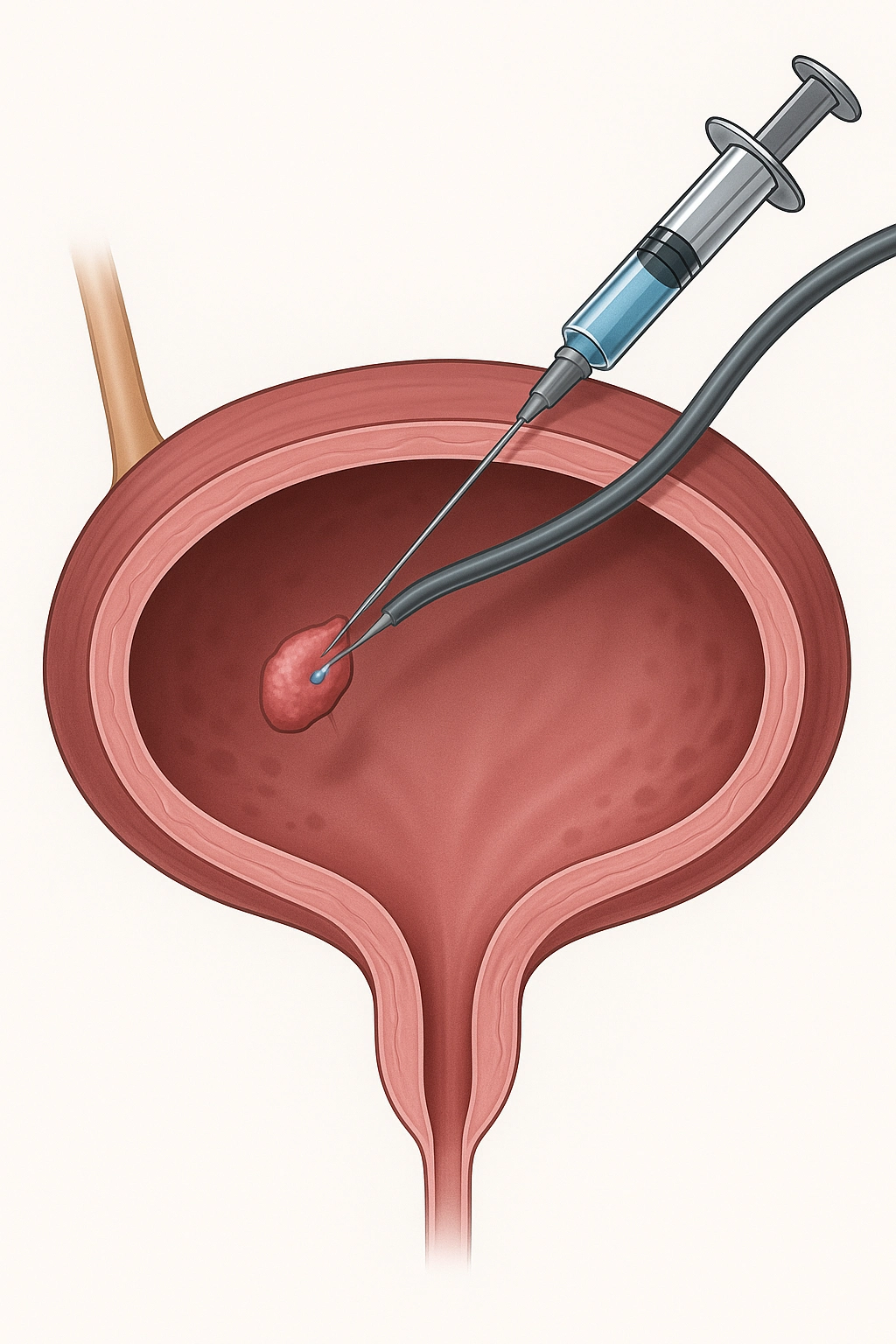
🔹 Performed through the natural tract (urethra) using a flexible endoscope
🔹 Botulinum toxin injections at several points of the bladder wall using a fine needle
Follow-up and results
Expected effects
Visible improvement within 7 to 10 days
Maximum effectiveness at 4 weeks
Duration of action: ~6 to 9 months (sometimes longer)
The treatment can be repeated if the effects wear off.
Benefits
✔ Non-surgical alternative
✔ Minimally invasive procedure, performed on an outpatient basis
✔ High satisfaction rate (70–80% improvement in good profiles)
Possible side effects
🔹 Urinary retention: difficulty urinating that may require temporary self-catheterization (≈10–20% of cases)
🔹 Urinary tract infection: antibiotic prophylaxis may be prescribed
🔹 Very rarely: traces of blood in the urine, local discomfort
Contraindications
🔹 Active urinary tract infection at the time of the act
🔹 Uncorrected coagulation disorders
🔹 Pregnancy or breastfeeding
🔹 History of allergy to botulinum toxin (rare)
Why consult Dr Laurence Peyrat?
✔ Recognized expertise in functional urology and management of complex urinary disorders,
✔ Personalized assessment before each injection to tailor treatment to your profile,
✔ Post-procedure support with rigorous follow-up (clinics, assessments, adjustments).
✔ Regular practice of botulinum toxin injections, with mastery of minimally invasive endoscopic techniques,
My video review
In this video, I explain what botulinum toxin injections into the bladder (Botox®) are.
This minimally invasive treatment helps reduce urgency, improve bladder capacity and relieve urinary incontinence.
A first step towards an effective solution
Make an appointment today to benefit from attentive listening and support tailored to your situation.