
Neurological bladder
When should you consider specialist care?
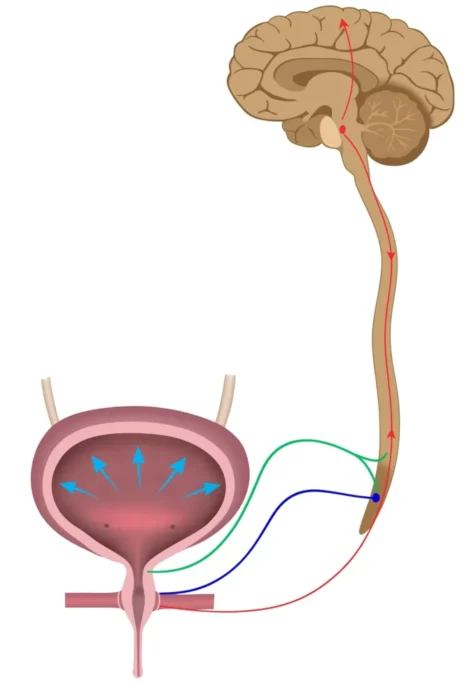
Neurological bladder is a pathology linked to dysfunction of the nervous control of the bladder, secondary to damage to the central or peripheral nervous system. It can lead to problems with urinary emptying, leakage or recurrent infections, which can sometimes be serious.
A specialized urological consultation is indicated when the neurological pathology causes :
✔ urinary retention (difficulty or inability to urinate),
✔ uncontrolled urinary incontinence ,
✔ pollakiuria (frequent need to urinate),
✔ recurrent urinary tract infections ,
✔ bladder pain or chronic discomfort .
Appropriate management can preserve renal function, improve quality of life and prevent long-term complications.

Neurological bladder
Neurological bladder origin
✔ Multiple sclerosis (MS)
✔ Parkinson’s Disease
✔ Spinal cord injuries (accident, myelopathy)
✔ Spina bifida (in adults or children)
✔ Diabetes with peripheral neuropathy
✔ Sequelae of a stroke (CVA)
✔ Pelvic or spinal surgeries
Each case has its own specific clinical picture, hence the importance of apersonalized
assessment.
Possible symptoms
✔ Involuntary urinary leakage (incontinence)
✔ Sensation of incomplete drainage
✔ Urgent need to urinate, sometimes uncontrollable
✔ Difficulty urinating or need to strain
✔ Frequent urination, day and night
✔ Recurrent urinary tract infections
✔ Pelvic discomfort, bladder pain or spasms
Diagnostic workup
✔ Interview and clinical examination
✔ Urine analysis and urine culture (to check for infection)
✔ Bladder and kidney ultrasound (post-void residual, renal impact)
✔ Urodynamic assessment (evaluation of bladder and sphincter function)
✔ Cystoscopy (if necessary, to observe the bladder wall)
This assessment enables the neurological bladder to be classified according to the type of dysfunction:
overactive, hypoactive or vesico-sphincter dyssynergia.
Treatments proposed by Dr Laurence Peyrat
The treatment strategy is tailored to each individual case, depending on the type of neurological impairment, the functional impact and the patient’s goals.
✔ Basic measures
🔹 Hygienic-dietary rules: adapting water intake, regular urination.
🔹 Regular monitoring of bladder and kidney function
✔ Drug treatments
🔹 Anticholinergics or beta-3 agonists to calm an overactive bladder.
🔹 Alpha-blockers to facilitate bladder emptying.
✔ Intermittent self-catheterization
🔹 In case of chronic retention or incomplete emptying.
🔹 Self-draining technique several times a day, taught according to a personalized protocol.
🔹 Helps prevent infections, pain and bladder dilation.
✔ Botulinum toxin injections (Botox®)
🔹 Indicated in treatment-resistant neurological overactive bladder.
🔹 Injections into the bladder wall, under local or general anesthesia.
🔹 Temporary effect (6 to 9 months), may be renewed.
✔ Sacral neuromodulation
🔹 Electrical stimulation of the sacral nerve to regulate bladder function.
🔹 Reserved for selected cases, after full assessment.
✔ Specialty surgeries
🔹 Artificial sphincter or urinary prosthesis in certain cases of severe incontinence.
🔹 Enterocystoplasty (bladder augmentation by intestinal grafting) in complex cases.
🔹 Urinary diversion if the bladder is non-functional and threatening to the kidneys.
Management objectives
✔ Improve quality of life (reduced leakage, more comfortable urination),
✔ Protect the kidneys (prevent reflux, dilation of the urinary tract),
✔ Prevent chronic urinary tract infections ,
✔ Maintain or restore urinary autonomy .
Why consult Dr Laurence Peyrat?
✔ Specialist in functional and neurological urology,
✔ Comprehensive, personalized management of urinary disorders of neurological origin,
✔ Collaboration with neurologists, physiotherapists, pain centers
✔ Rigorous, caring follow-up, with careful attention to each patient's specific needs.
My video review
Discover the principle of the neurogenic bladder in pictures.
A bladder dysfunction linked to damage to the nervous system. It can lead to leakage, difficulty urinating, or chronic retention.
A first step towards an effective solution
Make an appointment today to benefit from attentive listening and support tailored to your situation.