
Cystostomy
Diverting urine when the bladder can no longer empty
Dr. Laurence Peyrat in Paris performs cystostomy, a minimally invasive procedure to drain the bladder when natural emptying is impossible.
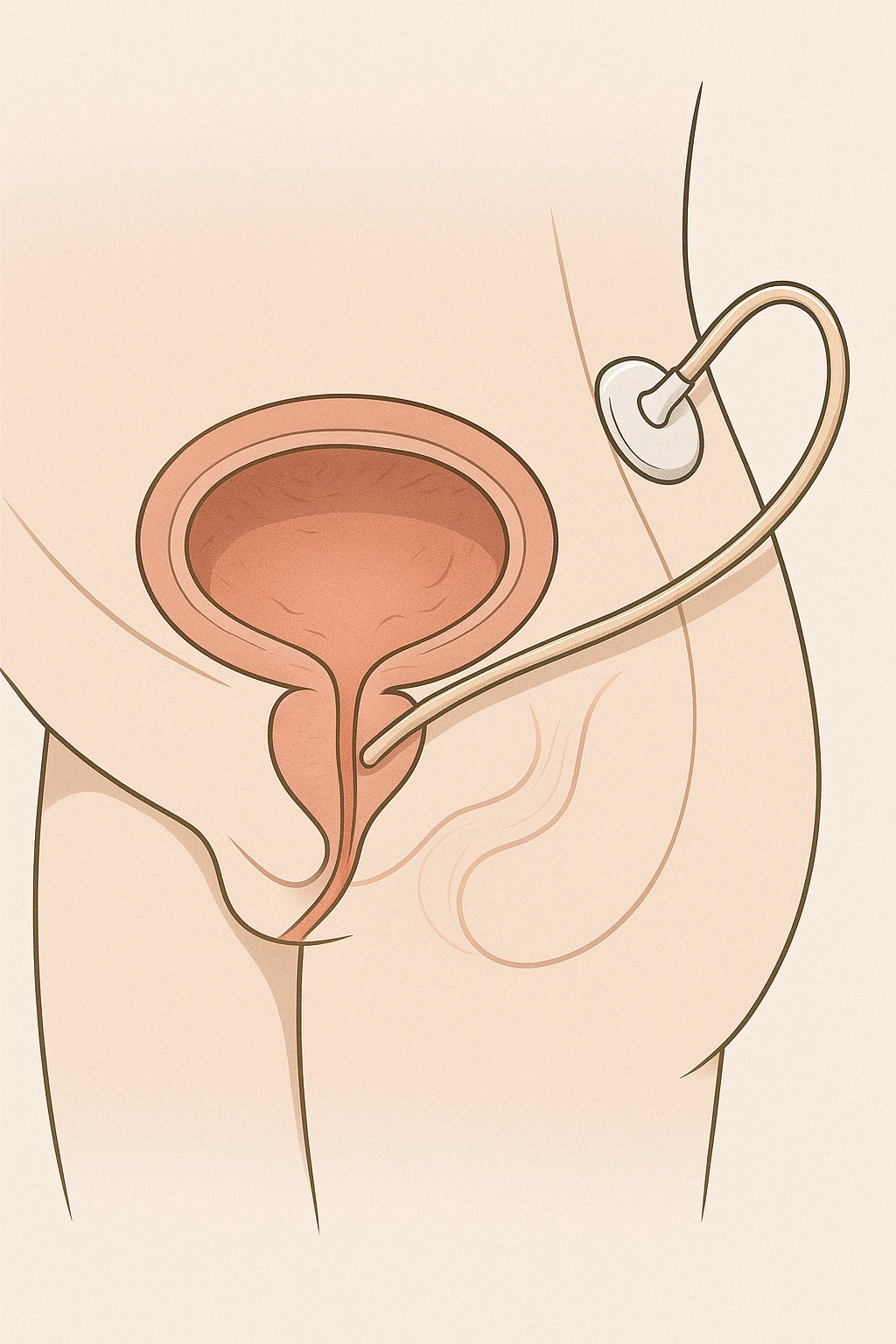
When should a cystostomy be considered?
A cystostomy is a surgical procedure that creates a temporary or permanent opening in the bladder to allow for drainage outside the natural urinary tract. This technique is used in several situations where normal urine flow is impossible or contraindicated.
Cystostomy is indicated in particular in cases of:
Severe urethral obstruction (tumors, strictures, trauma) preventing the normal flow of urine,
Significant bladder dysfunction with inability to urinate spontaneously,
Recurrent urinary tract infections requiring prolonged drainage,
Preparation for or following complex pelvic or urological surgery ,
Palliative care in some patients to relieve symptoms.
Objectives of cystostomy
To ensure effective and safe bladder drainage,
Preventing or treating complications related to urinary retention,
To improve patient comfort and quality of life,
Facilitating care in complex situations.
surgical technique
Cystostomy can be performed using different methods, depending on the clinical context:
Percutaneous cystostomy (under radiological or ultrasound control): a minimally invasive method, often used in emergencies or outpatient care.
Surgical cystostomy : incision in the lower abdomen to expose the bladder and place a drain (probe or catheter).
The procedure is performed under local, regional or general anesthesia depending on the situation.
A probe is placed through the abdominal wall towards the bladder to ensure continuous drainage.
Post-operative care
Monitoring the proper functioning of the drain and the skin site
Moderate risk of local infection (can be prevented with antibiotics),
Probe management: regular changes and local care,
Possibility of returning home with appropriate equipment and medical follow-up.
Results and follow-up
Bladder drainage via cystostomy effectively prevents renal distension and complications.
Whether the device is maintained or removed depends on the progression of the underlying pathology.
Dr. Laurence Peyrat provides regular follow-up to adapt the care, prevent complications and plan for possible rehabilitation.
Why consult Dr. Laurence Peyrat?
Patient journey
Discover in video the typical patient journey, my approach to urology and my method of procedure.
Area of expertise
Cystostomy
 My review in videoLaurence Peyrat
My review in video
FAQ – Frequently Asked Questions
What is a cystostomy?
This involves the placement of a suprapubic catheter that drains the bladder directly through the abdominal wall, below the navel. It allows urine to be evacuated when passage through the urethra is impossible or contraindicated.
In what situations is it indicated?
In emergency situations of urinary retention when urethral catheterization is impossible, or for prolonged use in certain neurogenic bladders or situations of dependency, as a more comfortable alternative to an indwelling urethral catheter.
Is the insertion painful?
No. It is performed under local anesthesia, sometimes with ultrasound guidance, in a few minutes. Moderate discomfort at the puncture site may persist for one to two days.
What is it like to live with a suprapubic catheter?
The catheter is easily concealed under clothing and can be connected to a bag or a valve. It is changed regularly (every 4 to 6 weeks) during a consultation or at home. Good hydration and simple local hygiene minimize complications.
Dr Laurence Peyrat's expertise
Chirurgienne Urologue à Paris

Cystostomy: there are solutions.