
Neurogenic bladder
Urinary care tailored to neurological diseases
Discover the various treatments offered by Dr. Peyrat for neurogenic bladder
When should you consider specialized care?
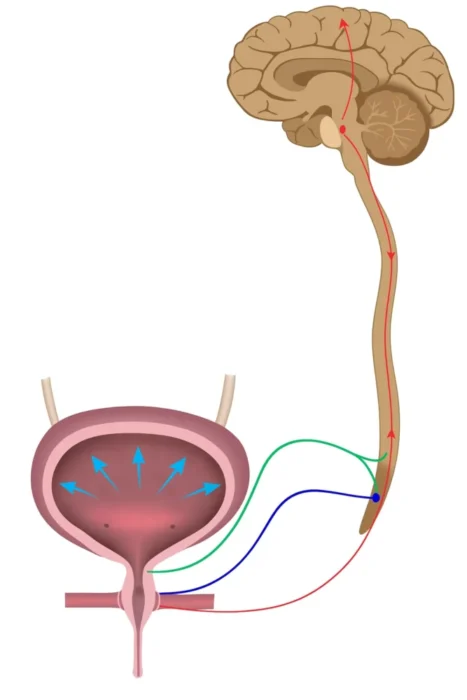
Neurogenic bladder is a condition linked to a dysfunction in the nervous system’s control of the bladder, secondary to damage to the central or peripheral nervous system. It can lead to urinary incontinence, leakage, or recurrent, sometimes serious, infections.
A specialist urological consultation is indicated when the neurological condition causes:
urinary retention (difficulty or inability to urinate),
uncontrolled urinary incontinence ,
pollakiuria (frequent urination),
recurrent urinary tract infections ,
bladder pain or chronic discomfort .
Appropriate care helps to preserve kidney function , improve quality of life and prevent long-term complications .

Neurogenic bladder
Origin of neurogenic bladder
Multiple sclerosis (MS)
Parkinson’s disease
Spinal cord injuries (accident, myelopathy)
Spina bifida (in adults or children)
Diabetes with peripheral neuropathy
After-effects of a stroke (CVA)
Pelvic or spinal surgeries
Each condition results in a specific clinical picture, hence the importance of a
personalized assessment .
Possible symptoms
Involuntary urinary leakage (incontinence)
Sensation of incomplete drainage
Urgent need to urinate, sometimes uncontrollable
Difficulty urinating or needing to strain
Frequent urination, day and night
Recurrent urinary tract infections
Pelvic discomfort, bladder pain or spasms
Diagnostic assessment
Interview and clinical examination
Urine analysis and urine culture (to check for infection)
Bladder and kidney ultrasound (post-void residual, renal impact)
Urodynamic assessment (evaluation of bladder and sphincter function)
Cystoscopy (if necessary, to observe the bladder wall)
This assessment allows for the classification of neurogenic bladder according to the type of dysfunction:
hyperactive, hypoactive or vesico-sphincteric dyssynergia.
Treatments offered by Dr. Laurence Peyrat
Objectives of the care
Improving quality of life (reduced leakage, more comfortable urination),
Protecting the kidneys (preventing reflux and dilation of the urinary tract),
Preventing chronic urinary tract infections ,
Maintaining or restoring urinary autonomy .
Why consult Dr. Laurence Peyrat?
My review in video
Discover the principle of the neurogenic bladder in pictures.
A bladder dysfunction linked to damage to the nervous system. It can lead to leakage, difficulty urinating, or chronic retention.
Area of expertise
Neurogenic bladder
 My review in videoLaurence Peyrat
My review in video
FAQ – Frequently Asked Questions
What is a neurogenic bladder?
It is a bladder dysfunction linked to damage to the nervous system: multiple sclerosis, spinal cord injury, Parkinson’s disease, stroke, diabetes… The bladder can become overactive, sluggish, or both, with a risk to the kidneys if it is not treated.
What are the warning signs?
Urinary urgency, leakage, difficulty emptying the bladder, recurrent urinary tract infections, or retention. In a neurological patient, these symptoms warrant urodynamic testing to assess precise bladder function.
Why is surveillance so important?
A neurogenic bladder with high pressure can silently damage the kidneys. Regular monitoring (urodynamic assessment, ultrasound, blood tests) allows treatment to be adjusted before the onset of kidney complications.
What treatments are possible?
Treatment options vary depending on the mechanism: medication, intermittent self-catheterization, Botox injections into the bladder, sacral neuromodulation, or even surgery in some cases. The goal is twofold: to protect the kidneys and restore continence and quality of life.
Dr Laurence Peyrat's expertise
Chirurgienne Urologue à Paris

Neurogenic bladder: there are solutions.