
Incontinence, hyperactivity
Urgent urges: regaining control of your bladder
Dr. Laurence Peyrat, a urologist in Paris, assesses and treats overactive bladder incontinence using personalized medical solutions.
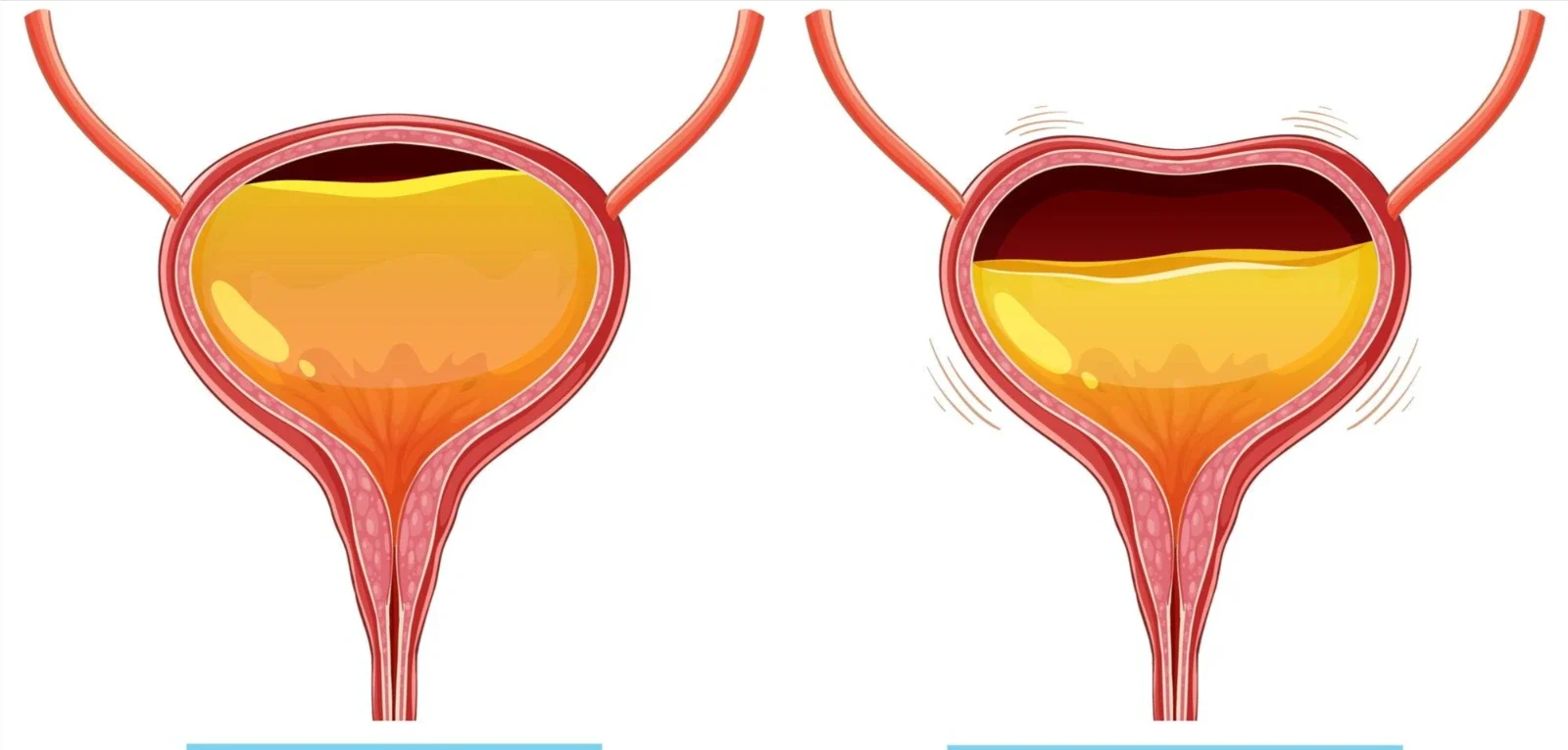
What is overactive bladder incontinence?
Overactive bladder (OAB) , also known as urinary incontinence, is characterized by a frequent and urgent need to urinate, often accompanied by involuntary leakage. Unlike stress incontinence, the leakage occurs following a sudden and difficult-to-control urge to urinate.
This disorder can severely disrupt daily life, sleep, and affect quality of life.
What are the symptoms?
What are the causes?
Overactive bladder results from an involuntary contraction of the bladder muscle (detrusor), which can be triggered by various factors:
Common causes include:
- Neurological causes (multiple sclerosis, Parkinson’s disease, strokes…),
- Urinary tract infections,
- Medications,
- Chronic bladder irritations,
- Idiopathic origins (without obvious cause).
When should I consult Dr. Laurence Peyrat?
How does the diagnosis process work?
The diagnosis is based on:
- A detailed consultation to understand your symptoms,
- A complete clinical examination ,
- Possible additional tests: urine analysis, ultrasound, urodynamics,
- Elimination of infectious causes or other pathologies.
What are the possible solutions?
Why consult Dr. Laurence Peyrat?
My review in video
This video explains in simple terms what overactive bladder incontinence is.
Do you suffer from incontinence?
Don’t let this problem impact your well-being and self-confidence.
Paris 8th – Paris Opera Urology Center & Turin Clinic
Consultations by appointment and via teleconsultation
Your needs
Incontinence, hyperactivity

My review in video
FAQ – Frequently Asked Questions
What is overactive bladder?
It is a syndrome characterized by sudden and urgent urges to urinate (urgency), excessively frequent urination day and night, with or without leakage. The bladder contracts inappropriately even when it is not full.
What are the causes?
Most often, no cause is found (idiopathic hyperactivity). It can also be caused by age, menopause, infection, a bladder polyp, or a neurological disease — hence the importance of an assessment before treatment.
What are the first-line treatments?
Bladder and perineal rehabilitation, lifestyle and dietary measures (reducing coffee, tea, and soda intake, and adapting beverages), and medication (anticholinergics or beta-3 agonists) are sufficient for many patients.
What to do if the medication fails?
Two highly effective treatments exist: Botox injections into the bladder, repeated every 6 to 9 months, and sacral neuromodulation, a “pacemaker” for the bladder. Tibial nerve stimulation is a complementary non-invasive option.
Dr Laurence Peyrat's expertise
Chirurgienne Urologue à Paris

Incontinence, hyperactivity: there are solutions.