
Endoscopic surgery via the vaginal route
Operate through natural channels, without a scar
Dr. Laurence Peyrat in Paris practices endoscopic surgery via the lower route, a minimally invasive technique to diagnose and treat bladder pathologies.
When should endoscopic surgery be considered?
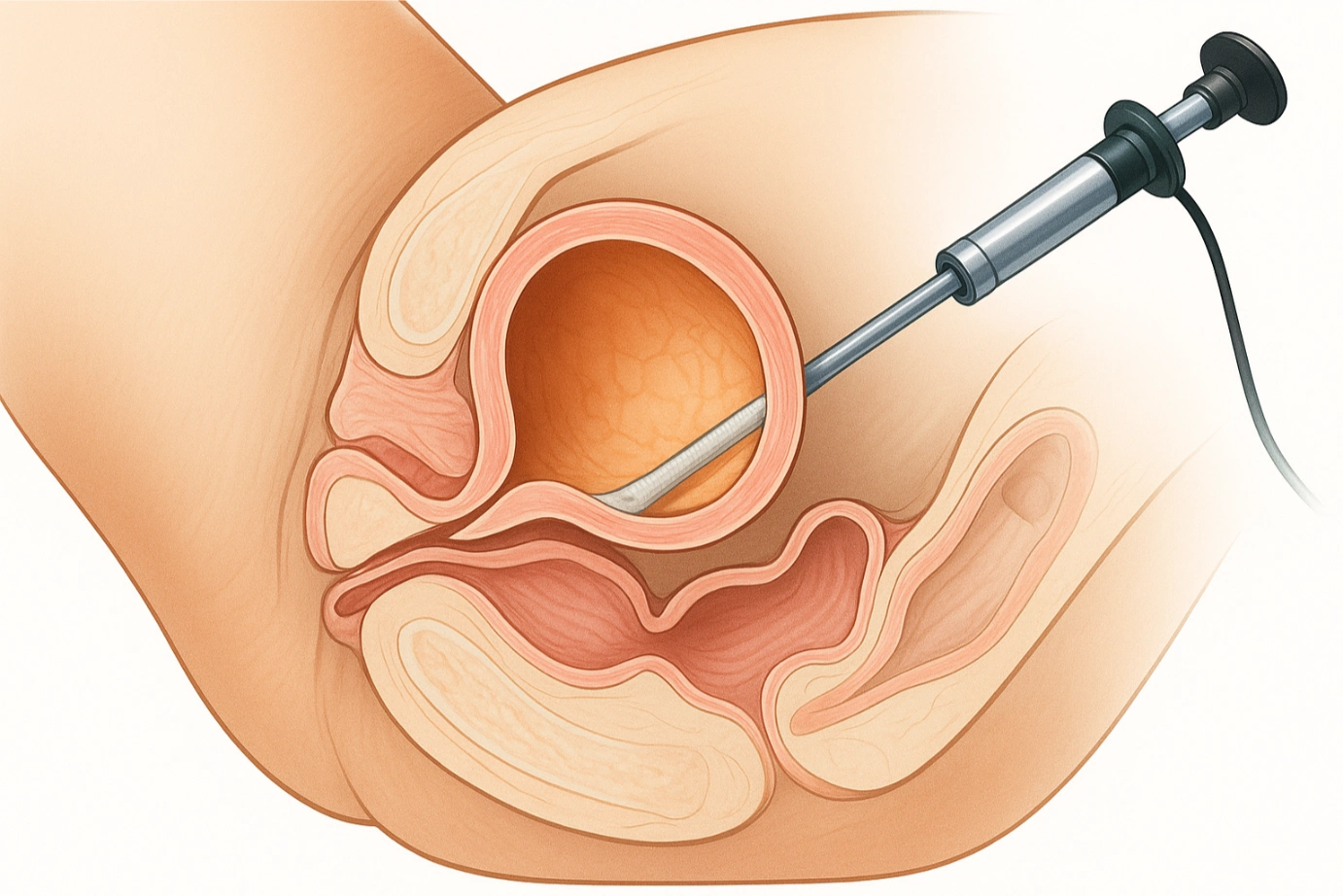
Endoscopic surgery via the lower route encompasses a range of procedures performed without skin incisions , using natural pathways (urethra, vagina) and an endoscope .
This minimally invasive approach makes it possible to effectively treat many urological pathologies, with often simpler post-operative procedures and faster recovery.
The endoscopic approach is preferred for treating several conditions of the urinary tract, including:
Urinary lithiasis (bladder or ureteral stones),
Bladder tumors (superficial lesions),
Urethral strictures (urethral stenosis),
Hematuria of undetermined origin (investigation),
Painful bladder syndrome (hydrodystension),
Urinary incontinence (submucosal injection),
Bladder or urethral biopsies for diagnostic purposes.
This approach allows for a complete exploration of the urethra and bladder , and, in some cases, immediate intervention .
Diagnostic cystoscopy vs. other treatments

Procedure of the intervention
Endoscopic bladder surgery in women: This is a minimally invasive procedure performed on an outpatient basis, under local, regional, or general anesthesia depending on the procedure. Principle: exploration and treatment of bladder lesions through the natural opening, without external incision, using an endoscope inserted through the urethra.
Surgical procedure: details Duration : from a few minutes to approximately one hour Hospitalization : outpatient (same-day discharge) Access route : natural, without external scarring Urinary catheterization : sometimes necessary a few hours after the procedure
Post-operative effects: Moderate burning during urination in the days following the procedure; small bloody losses in the urine (hematuria); low but monitored risk of urinary tract infection; rapid return to daily activities in the majority of cases. Specific instructions will be given by Dr. Peyrat to promote optimal recovery: stay well hydrated, avoid exertion, and wait before resuming sexual relations.
Why consult Dr. Laurence Peyrat?
Opt for endoscopic surgery
Endoscopic surgery via the lower route is preferred for treating several conditions of the urinary system, particularly in cases of painful bladder .
Area of expertise
Endoscopic surgery via the vaginal route
 My review in videoLaurence Peyrat
My review in video
FAQ – Frequently Asked Questions
What is endoscopic surgery via the lower route?
This is the set of interventions carried out through natural channels, without any skin incision, using an endoscope inserted through the urethra: resection of polyps, treatment of bladder lesions, intravesical injections, procedures on the urethra.
What are its advantages?
No scarring, minimal postoperative pain, short hospital stay (often outpatient), and rapid recovery. High-definition endoscopic vision allows for very precise procedures.
What type of anesthesia is used?
Depending on the procedure and your preferences: short general anesthesia or spinal anesthesia. Simpler procedures can be performed under local anesthesia. The anesthesiologist will see you for a consultation before the procedure.
What are the usual consequences?
Burning sensation when urinating and slightly discolored urine for a few days are normal. Staying well-hydrated will alleviate these symptoms. Consult a doctor promptly if you experience fever, significant bleeding, or difficulty urinating.
Dr Laurence Peyrat's expertise
Chirurgienne Urologue à Paris

Endoscopic surgery via the vaginal route: there are solutions.